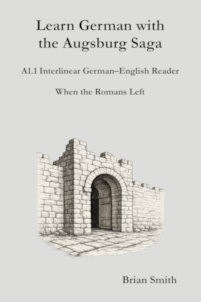
After the Roman administration withdraws, the province of Raetia is left without clear protection or order. Among crumbling villas and overgrown streets, the Hartwig family searches for a place to settle. Their days are shaped by practical concerns: securing a dry house, clearing land for a garden, and finding a dependable source of water. They meet Julius, a local man who remains closely tied to the Roman past, and through small exchanges of food, labor, and trust, a fragile cooperation begins. As more families arrive and signs of life slowly return, the Hartwigs focus on the steady work of turning ruins into a home.
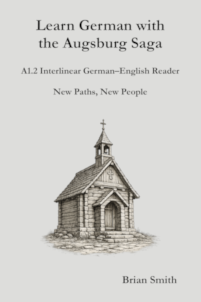
New Paths, New People
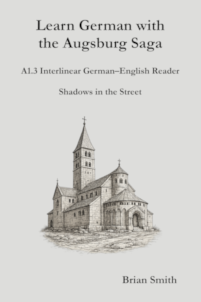
Shadows in the Street
Now established as weavers in a growing medieval city, the Hartwig family finds their routines increasingly shaped by suspicion and unrest. While preparing for a daughter’s wedding, they face the arrival of exhausted travelers and the spread of illness during a harsh winter. Ordinary details—a lamp burning late at night, a fragment of an old manuscript—are reinterpreted as signs of hidden danger. Rudolf, a priest and member of the family, moves between market and monastery, attempting to calm fears and uncover the truth. The story shows how quickly fear can alter familiar relationships, and how a family struggles to preserve dignity and order as public anxiety grows.
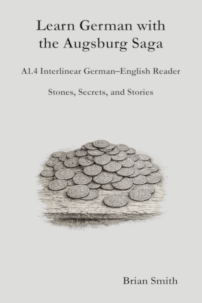
Stones, Secrets, and Stories
Between 1250 and 1300, three Hartwig brothers—a weaver, a priest, and a merchant—observe a shift in the life of their city. While construction of a new tower signals confidence and growth, the discovery of counterfeit coins disrupts trade and brings guild activity to a halt. Through careful listening, weighing, and testing of metal, the family begins to notice patterns linking the markets to the city’s leadership. Encounters with anxious merchants and guarded officials point toward irregularities behind the Rathaus walls. As Augsburg’s reputation is threatened, the brothers rely on routine, cooperation, and trust to help restore stability in a city built on commerce.
Love and Two Churches
Set between 1450 and 1550, this story unfolds during a period of religious change and growing division. The Hartwigs, a Catholic weaving family, and the Krämers, a Protestant family of printers, share the same streets but live increasingly separate lives. Workshops fill with new songs and printed texts, and misunderstandings multiply. When Lina Hartwig and Jonas Krämer form a connection, their fathers react with suspicion, fearing social and religious consequences. Through small acts—a shared song, a concealed note, a brief conversation—the families must decide whether to withdraw into hostility or attempt coexistence. Larger transformations, from the spread of reformist ideas to the influence of the printing press, enter the story through everyday concerns and private choices.
God’s Dog
Although the Peace of Westphalia has reached Augsburg, the city remains marked by rubble, empty plots, and missing records. For the Hartwig and Wagenknecht families, survival soon turns into a bitter dispute over a devastated piece of land between their homes. While the exhausted fathers argue about shifted borders and half-buried stones, their children, Matthes and Lena, form a quiet connection among the ruins. A young, ambitious priest introduces an old religious custom—a “judgment by God”—in an attempt to restore authority and resolve the conflict. The community gathers not for violence, but for a simple ritual involving an old, hungry dog named Bruno. The story follows the slow, uncertain process of rebuilding trust in a world where peace must first be learned again.
Saint Stultitius of Augsburg
In 1703, the approach of Austrian troops and rising prices unsettle daily life in Augsburg. Seeking reassurance, many residents turn to superstition, creating an opening for a stranger who sells “blessed” objects and empty promises. Priest Hartwig watches with growing concern as fear clouds judgment, even among neighbors he once trusted. His brother Rudolf struggles to manage the household amid increasing costs, while the priest recognizes that open confrontation could deepen unrest. Instead, he devises a careful plan centered on a fictional saint to expose the deception without provoking panic. The story unfolds through small encounters and measured choices, showing how integrity can be defended quietly when authority is fragile.
The Cold Years
Between 1770 and 1772, Central Europe experiences years of unstable weather, with heavy rains and sudden frosts destroying crops. In Augsburg, shortages become immediate as bread prices climb and firewood remains damp and scarce. Priest Hartwig and his brother Ludwig observe hardship spreading through the city, from empty market stalls to struggling farms beyond the walls. Amid this pressure, a new and mistrusted plant—the potato—is introduced as a possible solution. The family must decide whether to abandon long-held habits in favor of survival, weighing tradition against necessity. Through everyday decisions, the story portrays a community learning to endure prolonged uncertainty.
Napoleon’s Shadow
A Dream in 1848
As unrest spreads across the German states, Anna Hartwig manages the family’s wood workshop amid rising prices and unreliable deliveries. Her youngest son, Ludwig, returns from Munich inspired by constitutional ideals and political reform, drawing unwanted attention from local authorities. Political change enters the household through tense conversations at the dinner table and the sudden appearance of a traveler from Switzerland. Demonstrations near the Rathaus interrupt daily routines, while police observation becomes an accepted presence. The family navigates these weeks by balancing youthful conviction with responsibility and caution, as each decision carries consequences in a city suspended between hope and fear.
Born in War
As the Franco-Prussian War reshapes Europe, Ludwig Hartwig carries the responsibility of constructing a new city bridge while waiting anxiously for letters from his son Heinrich. In the family workshop and apothecary, political change appears in muted form—through patriotic newspaper reports and the growing scarcity of essential goods. A reserved newcomer settles in town, drawing the attention of local authorities and hinting at a history that extends far beyond Augsburg. The family responds to these pressures by focusing on skilled work and maintaining household order. Schooldays, apprenticeships, and routine labor continue, even as the proclamation of a new German Empire marks a lasting transformation of their world.

A Tryst with 1898
As industrial life quickens, the Hartwig family adapts to a city increasingly shaped by machines, schedules, and global awareness. Karl oversees a modernizing wood workshop under rising competitive pressure, while Anna adjusts to the demands of fast-moving print production. Distant events—colonial expansion and the assassination of Empress Elisabeth—reach the household through daily newspapers. Within the family, Matthias begins to look beyond Augsburg, considering service in East Africa despite his responsibilities at home. Ordinary scenes—herbal preparations in the apothecary and children playing with toy trains—unfold alongside a local criminal investigation. The story traces small decisions that reflect a society poised at the threshold of a new century.

Icy Waters and Desert Winds
Life follows familiar patterns in Augsburg, from Karl Hartwig’s furniture workshop to the steady flow of customers in the family pharmacy. Early in the year, a substantial letter from East Africa brings colonial realities directly into the household. Conversations about rent increases and wedding plans share space with newspaper reports of the Titanic disaster and unrest in the Balkans. These reports subtly alter how the family understands safety and progress. As events abroad echo personal vulnerabilities, the Hartwigs begin to sense that stability may be more fragile than it appears, and that the pace of change is no longer distant.
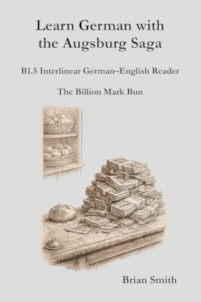
The Billion Mark Bun
When the war ends, exhaustion gives way to a deeper crisis as the German economy begins to unravel. Karl Hartwig fights to keep his furniture workshop operating despite rapidly rising material costs, while the family pharmacy turns into a place of barter rather than trade. National developments—the Treaty of Versailles and the occupation of the Ruhr—enter the home through thin newspapers and tense conversations with neighbors. Loss, hunger, and physical weakness shape daily life, forcing the family to sell heirlooms for basic food. Children stack billion-mark notes like toys, while adults count coins that lose value by the day. In this distorted reality, ordinary persistence becomes the family’s only constant.
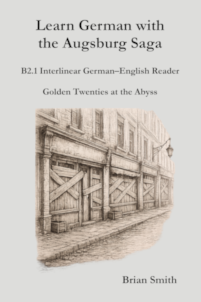
Golden Twenties at the Abyss

Pied Pipers in Red and Brown
The early 1930s bring hardship to Augsburg as businesses close and faith in established institutions fades. Wilhelm and Karl struggle to keep the family workshop operating, while younger family members face a future stripped of earlier expectations. In offices, shops, and the pharmacy, conversations become cautious as political uniforms turn into a permanent presence in public life. Seeking security, Hans joins the police and finds himself inside a new system that enforces strict obedience. Friendships strain under suspicion, slogans replace discussion, and silence increasingly feels like protection. By the end of 1933, uncertainty has given way to a rigid order that leaves little space for dissent.

Glass Shards
Between 1937 and 1938, the Hartwig family benefits from economic recovery while daily life is steadily reshaped by regulation. Wilhelm runs a busy workshop, and Emma manages international correspondence, even as compliance becomes routine. Their Jewish neighbors, the Rosenfelds, are gradually forced out of their livelihood, leading to secret meetings and an urgent effort to move assets across the border to Italy. Hans, now serving in the Augsburg police, uncovers evidence that implicates his own family, forcing him to decide what to record and what to omit. As uniforms become unremarkable and international tension fills the radio broadcasts, the family clings to normal routines. This balance collapses in November 1938, when open violence reaches the streets and the consequences of earlier silence can no longer be avoided.
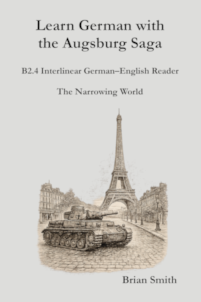
The Narrowing World
From 1938 to 1943, the Hartwig family’s daily life is increasingly dictated by wartime administration. Workshop production is redirected toward standardized orders for the front, while the pharmacy struggles with shortages governed by rigid classifications. Gretl takes a position in the Gauleiter’s office, processing endless lists of firms and materials deemed essential, and begins to notice inconsistencies that suggest deeper corruption. Her brother Hans, working in the police, investigates a death that draws him into the same bureaucratic system responsible for reallocating the homes and possessions of deported neighbors. Reports from Stalingrad and North Africa filter through the radio as air-raid drills, longer shifts, and enforced discretion become normal. Private life steadily contracts as pragmatic decisions replace open discussion.
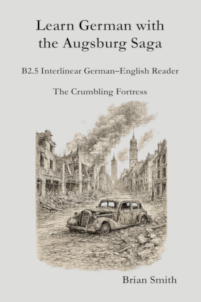
The Crumbling Fortress
Between 1944 and 1945, everyday life breaks down under the pressure of war. Paula and Konrad struggle to keep the pharmacy functioning despite freezing temperatures and empty shelves, while Wilhelm and Karl-Heinz sustain the workshop by repairing what little remains. In her administrative role, Gretl witnesses the collapse of the bureaucracy she once relied on, as orders contradict one another and responsibilities lose clarity. Allied air raids intensify, and news from the front becomes a list of lost cities. Basement shelters, refugees, and returning soldiers shape daily existence. When surrender finally comes, it brings occupation rather than relief, and the year ends with the recognition that although the world has changed beyond repair, the family has endured.



When Voices Returned
The Hartwig family lives in a West Germany shaped by stability, discipline, and a careful avoidance of recent history. Karl-Heinz devotes himself to the craft of his woodworking shop, while his son Michael and the younger generation begin to sense contradictions beneath everyday order. The arrival of a letter from Israel, written by a former neighbor who fled in 1938, forces older family members to confront memories they have long kept apart from daily life. Reports of the Vietnam War and student protests enter the living room through radio and television, contrasting sharply with Augsburg’s orderly streets. Through restrained conversations and small decisions, the family negotiates the tension between preserving security and acknowledging what has remained unspoken.

Hope and Peril
In the early 1970s, the Hartwig family lives amid economic stability and growing unease. The older generation holds fast to work routines and administrative order, while younger family members press for clarity about the family’s role in the past. News of border violence and militant attacks increasingly punctuates daily life, culminating in the events of the 1972 Munich Olympics. When a long-distance connection to Israel results in an unexpected visit, long-maintained silences are directly challenged. Through candid conversations and subtle changes within the household, the family must decide whether normality can be sustained as public danger intrudes into private space.
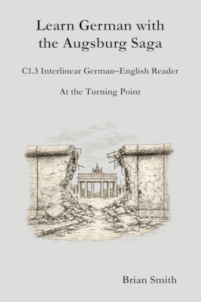
At the Turning Point
From the early 1970s through 1990, the division of Germany defines daily experience more through restrictions and quiet adjustments than open conflict. In Augsburg, Claudia works in a radio newsroom, while Michael manages the family workshop under increasing economic pressure. Major political developments—from cautious détente to sudden upheaval—enter family life through broadcasts, classrooms, and private discussions. Plans for holidays and careers continue even as reports of demonstrations and border openings dominate the airwaves. As 1989 draws to a close, the Hartwigs face a future in which long-standing structures disappear, leaving questions of identity and belonging unresolved.
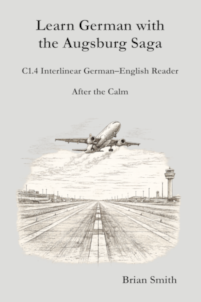
After the Calm
Between 1990 and 2001, Germany moves through a period of confidence following the end of the Cold War. In Augsburg, the Hartwig family focuses on practical concerns: Michael works to stabilize the family business, and Peter and Nina navigate the early years of parenthood. Decisions about careers, housing, and travel—including a significant journey to Namibia—shape family life, while unresolved questions about the former GDR remain largely unspoken. Technological change accelerates, and domestic routines adapt to a more globalized reality. As the new millennium begins, this apparent stability is interrupted when the events of September 2001 enter the household through live broadcasts.
The Way Ahead
Set in 2025, the final volume follows the Hartwig family as political and economic pressures steadily shape everyday routines. Lukas and Luise contend with energy costs, job insecurity, and the visible securitization of public spaces, from barriers at Christmas markets to police presence at schools. Their son Markus encounters this world through homework assignments and short news segments, attempting to connect abstract ideas with local realities of industrial decline and social tension. Family trips to cities such as Regensburg, Passau, and Munich provide brief distance, yet remain constrained by careful budgeting. Through measured conversations and small adjustments, the family maintains continuity as a familiar era gives way to an uncertain present.